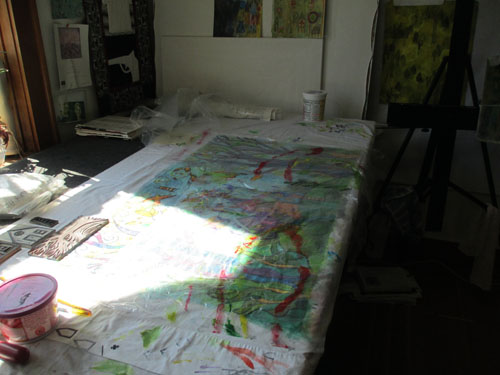
I promised to put together a little explanation of dye painting for
Zom. I hesitate to call this a tutorial, because the process is rather complex (lots of recipes, more than one way to do things, health and safety considerations). The aim here is to show how I do things in my studio. Everything I know I learned from
Ann Johnston and
Jane Dunnewold (oh, and experience). I urge those interested in pursuing dye painting to read the excellent books available from these two artists, or better yet, take their workshops.
I work on cotton which has been pre-soaked in a soda ash
solution. The soda ash functions as the
binding agent, fixing the dye molecules to the fabric.
Procion
MX dye comes as a powder and its dust is toxic to breathe, so use a good filter
mask when mixing dye with water to make concentrates.
I like to make my dye up in squeeze bottles, 1/2 cup at a time. Dye concentrate lasts months in cool temps,
but does loose strength over time. Once
the dye is exposed to soda ash however, it exhausts rapidly – 15 minutes. I work with small amounts of dye at a time so
my brushes which are contaminated with soda ash from the cloth don’t exhaust my
dye too fast. I use little water color palettes to paint out of.
Dye
can be thickened for applying with stamps, and to control the flow of color on the cloth.
Prochem makes a dandy print paste which lasts a very long time once you
mix it up with water. Follow the
directions on the package.
Once you have good, thick print paste mixed up, you add dye
concentrate at a 50/50 ratio or more. A plastic fork is the best tool to blend paste with dye. A consistency
like honey is perfect for applying to rubber stamps. I use a foam brush to pat the thickened dye
onto the stamp.
In order to produce good strong color, the dye must be
allowed to cure for 24 hours. The
moisture has to be held in the cloth and the room temperature must be above 65
degrees during curing. To help the water
be ‘wetter’, urea is used. Urea mixed
with water is used to thin the dye paste and to lighten values when using un-thickened
dye.
Brushes for applying dye should be synthetic only because of the soda ash tends to destroy natural bristle brushes over time. The best surface to work on is a work table covered with two layers of felt and an old sheet over that. Plastic is a nuisance underneath your work but you will need it to cover your paintings while they cure.
I hope this is helpful to readers and sparks interest in trying this endlessly fascinating medium.